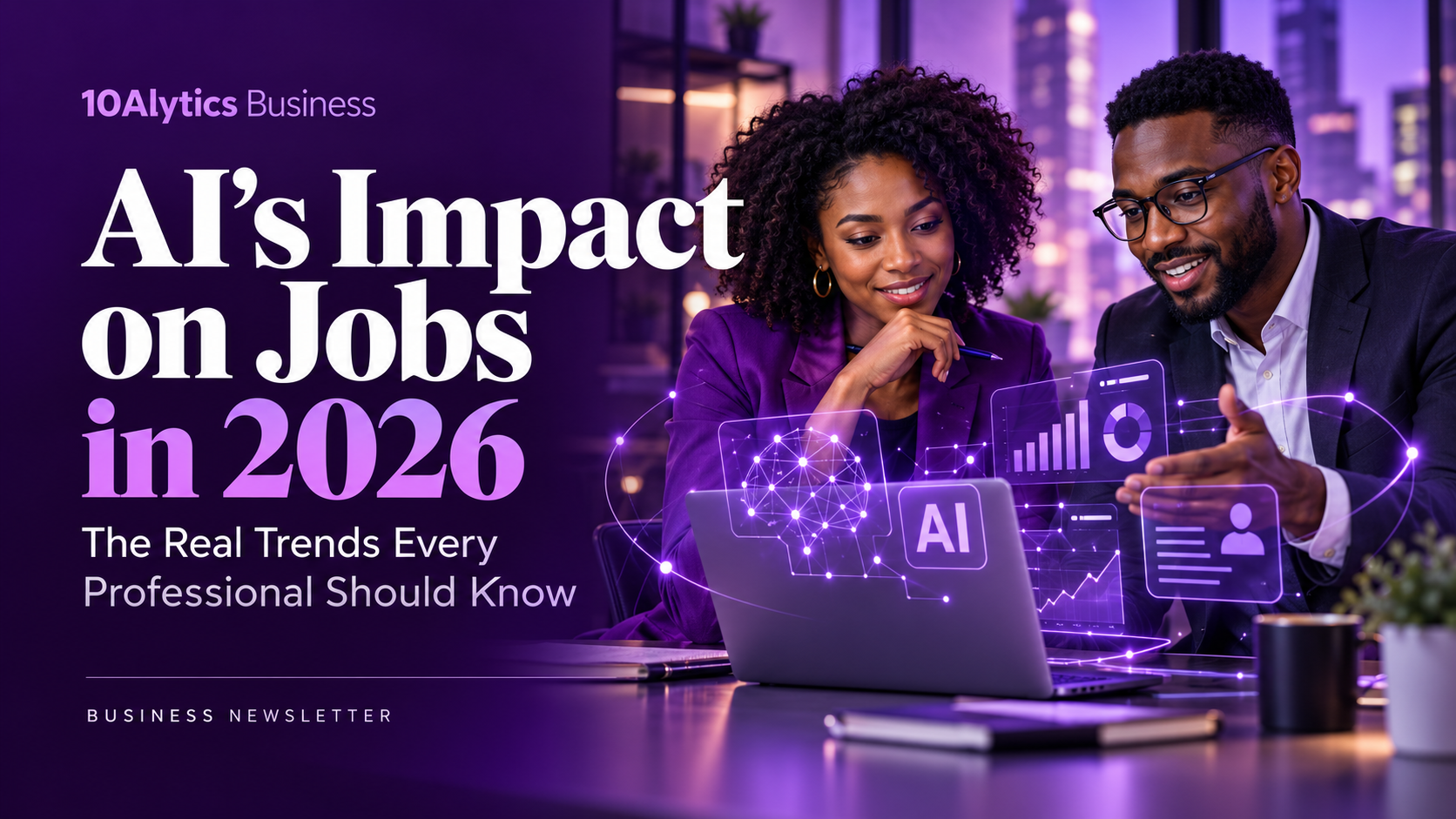
AI’s Impact on Jobs in 2026: The Real Trends Every Professional Should Know
AI’s Impact on Jobs in 2026: The Real Trends Every Professional Should Know
If AI handled your routine tasks tomorrow, what would your team still depend on you for?
That question is becoming more relevant in 2026. AI is reshaping job responsibilities, skill requirements and career opportunities, with different outcomes across roles.
Here are three trends to watch:
1. Routine tasks are changing and so is your contribution.
AI can support reporting, data processing and first drafts. But turning its output into a sound business decision still requires context and judgement. PwC’s 2026 research highlights growing demand for these human capabilities.
At work: A finance analyst uses AI to draft a variance report, then checks the figures, investigates unexpected costs and recommends action.
2. Entry-level expectations are rising.
PwC’s US analysis finds that AI-exposed junior roles increasingly require capabilities traditionally associated with senior staff, including judgement and leadership.
At work: A junior business analyst may use AI to summarise meeting notes but must still clarify conflicting requirements with stakeholders.
3. AI literacy belongs across the business.
The ILO identifies digital, AI and interpersonal skills as increasingly important as workplaces adopt AI.
At work: An HR professional uses AI-assisted analytics to explore turnover patterns, then speaks with managers to understand what the data cannot explain.
Your 30-second challenge: Pick one weekly task. Could AI help you complete it? What would you need to verify? What would you do with the time saved?
Build the skills to act.
10Alytics Business offers programmes in AI Automation, AI for Data & HR Analytics, and AI for Business Analysis & Project Management, connecting learning with practical workplace applications.
👉 Explore our programmes or reply with the task you’d like to improve.