The Administrative Professional of the Future Is an AI Automation Engineer
The Administrative Professional of the Future Is an AI Automation Engineer
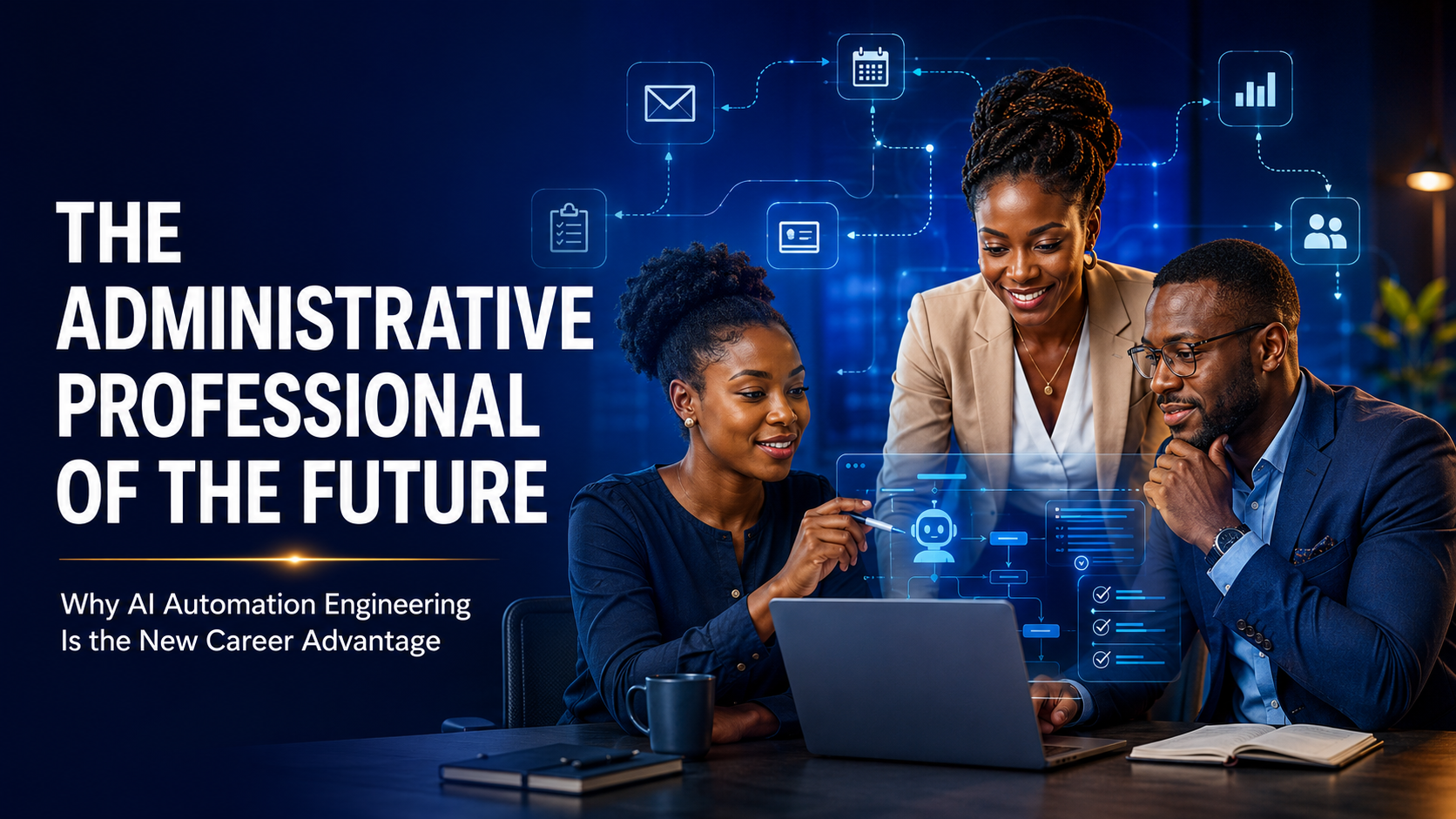
How virtual assistants, executive operations managers and growth managers can use AI automation to become more strategic, productive and indispensable.
For years, administrative professionals have been valued for keeping things organised, managing competing priorities and ensuring that work gets done.
But the nature of that work is changing.
Today, being efficient is no longer just about completing tasks faster. It is about building systems that complete repetitive tasks automatically, while you focus on decisions, relationships and outcomes.
This is where AI automation engineering becomes a career-defining skill.
What Is AI Automation Engineering?
AI automation engineering is the ability to design workflows that combine artificial intelligence with digital tools to complete tasks, move information and trigger actions with minimal manual effort.
It could mean building a system that:
- Reads incoming emails and sorts them by urgency
- Summarises meeting notes and assigns action items
- Generates weekly reports from multiple data sources
- Qualifies new leads and updates a CRM
- Sends reminders when deadlines are approaching
- Turns customer feedback into organised insights
- Creates first drafts of recurring documents and communications
You do not necessarily need to become a traditional software engineer to get started. Many of these systems can be created using AI assistants and no-code or low-code automation platforms.
The important skill is learning how to examine a business process, identify what can be automated and design a reliable workflow around it.
Why Administrative Professionals Need This Skill
Administrative professionals sit at the centre of information, communication and execution.
They understand how work moves through an organisation: who needs what, where delays happen, which tasks repeat and what tends to fall through the cracks.
That makes them uniquely positioned to build valuable automations.
The professional who only performs a repetitive task may eventually be replaced by a tool. But the professional who can identify, design and manage the system that performs the task becomes far more valuable.
AI automation is not simply a way to do more work. It is a way to move from task execution to operational problem-solving.
The Real Career Advantage
Knowing how to use an AI tool is useful. Knowing how to build a dependable business process around AI is far more powerful.
Anyone can ask an AI assistant to write an email. An AI automation engineer thinks beyond that single task:
- What event should trigger the email?
- Where will the required information come from?
- How should the message be personalised?
- Who needs to review it?
- Where should the activity be recorded?
- What should happen if the automation fails?
This combination of process thinking, tool knowledge and business understanding is what separates casual AI users from professionals who create measurable value.
Start With One Repetitive Problem
You do not need to automate an entire organisation on your first attempt.
Begin with one task you perform repeatedly.
Document every step. Identify the decisions involved. Decide which parts can be handled by AI, which can be automated with rules and which still require human judgement.
Then build a simple workflow and measure the result.
Did it reduce turnaround time?
Did it prevent errors?
Did it improve the customer or executive experience?
Did it save several hours each week?
That result can become more than an internal improvement. It can become a portfolio project, a résumé achievement and a compelling story to share during an interview.
The Future Belongs to Workflow Builders
AI will continue to change administrative and operational work. The strongest response is not to compete with automation by working faster.
It is to learn how to build, manage and improve the automation itself.
For virtual assistants, executive operations managers and growth managers, AI automation engineering offers a path to more strategic work, stronger career positioning and greater business impact.
The question is no longer simply, “Can you complete this task?”
The more valuable question is:
“Can you build a system that completes it consistently, intelligently and at scale?”
That is the opportunity and the professionals who begin developing this skill today will be better prepared to lead the workplace of tomorrow.
Ready to move from completing tasks to building intelligent systems?
Stay connected with 10Alytics Business for practical insights, projects and learning opportunities designed to help you build relevant, future-ready business and technology skills.